Year
2021–2022
Team
1 Product Designer, 1 PM, 6 Engineers
Tools & Methods
User interviews · Surveys · Journey mapping · Wireframing · Prototyping · Usability testing · WCAG accessibility
Overview
In 2021, medical cannabis in the UK was legal but barely understood. It had been prescribable on the NHS since 2018, yet the medical community remained cautious—partly because of stigma, but mostly because there was no reliable, centralised source of information for clinicians. Doctors who wanted to learn and prescribe were largely left to figure it out on their own.
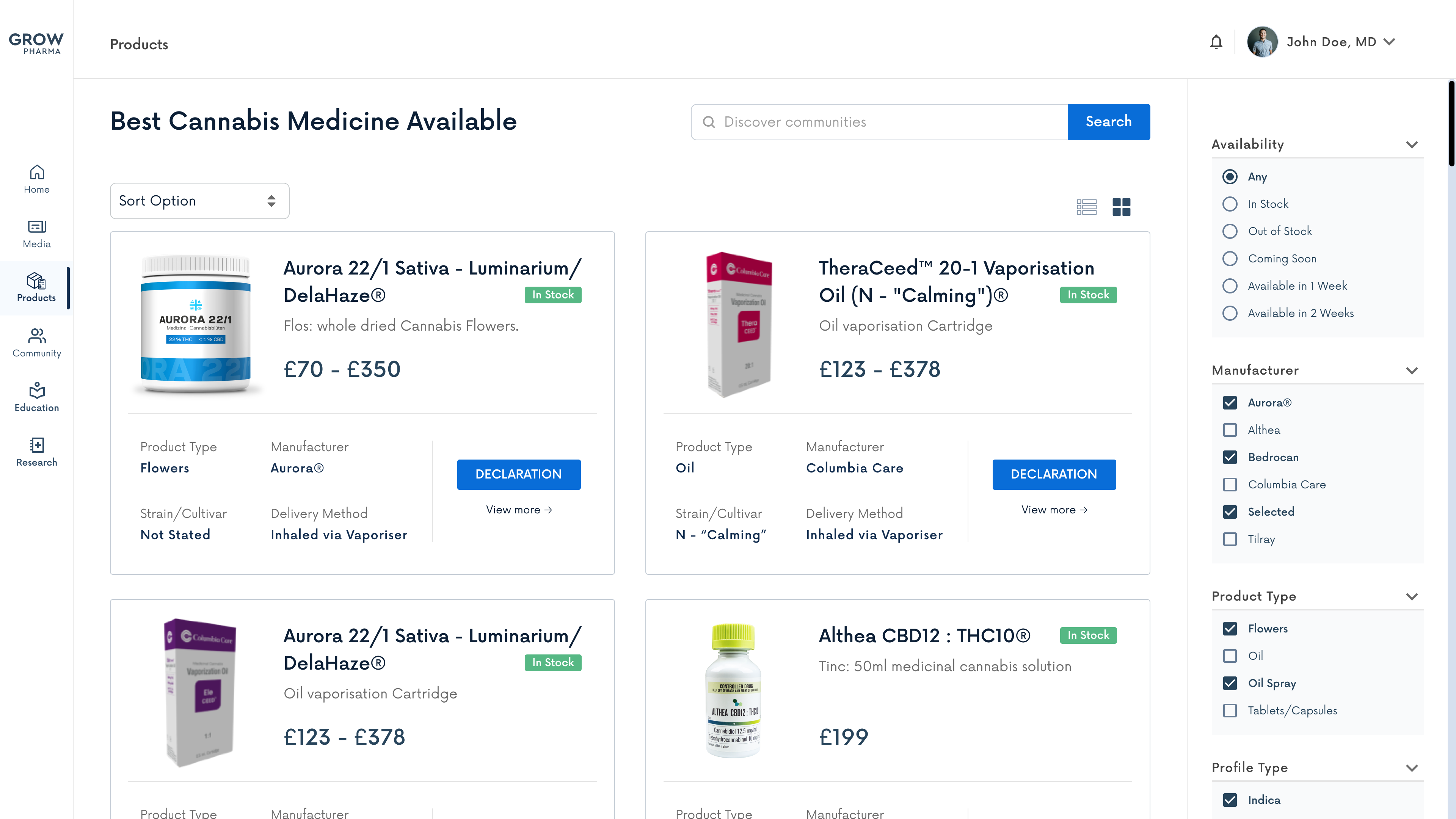
Grow Pharma, one of the UK's leading medical cannabis distributors, approached this problem head-on. They had the products. They had the clinical partnerships. What they lacked was a platform to connect both sides—a place where a GP or specialist could log in, understand the product landscape, manage their patients, and feel confident that what they were doing was compliant and evidence-backed.
That's where I came in.
"The brief wasn't just 'build a portal.' It was: help doctors trust a category they've been taught to be suspicious of."
This was a project that required me to hold two things at once: designing for a highly regulated, risk-averse user group, while building something modern and intuitive enough that it would actually get used. The product had to feel credible before it could feel useful.
Process
Why This Problem Was Different
Designing for doctors isn't like designing for consumers. They're time-starved, professionally accountable, and they abandon tools that waste their time without looking back. Layer in the specific context of medical cannabis — still stigmatized in the UK, regulatory landscape dense, clinical evidence scattered — and you had professionals who wanted to do the right thing but didn't feel supported enough to act confidently.
Looking at health-tech products already on the market — Babylon Health, Accurx, NHS-facing tools — I noticed they were built around efficiency but rarely around confidence. For a product in a regulatory grey zone, that wasn't going to be enough. This platform needed to build trust at every step.
The Team and My Role
The squad was lean: one PM, me as the sole product designer, and six engineers. That ratio meant I was wearing multiple hats — researcher, interaction designer, visual designer, documentation lead — while staying closely aligned with engineering from discovery to launch.
My contributions covered the full lifecycle: user research, product design, documentation, and user testing. No handoff culture. I was in the room for all of it.
Starting With the Right Questions
Before I opened Figma, I spent meaningful time in discovery. I needed to understand not just what doctors needed to do on this platform, but how they currently thought about medical cannabis, and where their anxiety lived.
I conducted interviews and surveys with healthcare professionals who had varying levels of familiarity with cannabis-based medicinal products (CBMPs). What I found shaped everything that followed:
Doctors weren't uninformed — they were under-confident. Most had encountered patients asking about medical cannabis, but felt uncertain about which products were appropriate, what the evidence said, and how to prescribe compliantly. This wasn't an information gap so much as a trust gap. They needed a platform that felt authoritative and professional, not like a startup trying to push products.
The prescription process felt legally and administratively intimidating. With no unified workflow, doctors were piecing things together from emails, PDFs, and phone calls. One wrong step in the regulatory chain felt career-threatening.
Communication with Grow Pharma was slow and impersonal. Doctors wanted responsiveness — quick answers to clinical questions, fast access to updated product data — not a support ticket queue.
These insights told me something important: this platform needed to do more than organize information. It needed to reduce perceived risk at every step.
Mapping Where Doctors Got Stuck
With the research in hand, I mapped the full doctor journey — from first login to completed prescription — and marked every moment where friction, doubt, or cognitive overload appeared.
The friction hotspots were predictable once I saw them clearly:
· Searching for reliable, current clinical information required leaving the platform entirely
· There was no structured way to understand a patient's full cannabis prescription history
· Prescribing required navigating between multiple systems with no connecting thread
· If a doctor had a clinical question, there was no fast path to a human at Grow Pharma
The journey map became my north star. Every design decision I made from that point was evaluated against one question: does this reduce the distance between a doctor and a confident, compliant decision?
Designing for Professionals Who Don't Have Time to Learn Your Interface
When I moved into wireframing, I made an early decision that drove the rest of the design: I was building a working tool, not an onboarding experience. The interface had to be instantly readable to someone opening it at 8am between patient appointments. No tutorials. No walkthroughs. Just clear, purposeful design.
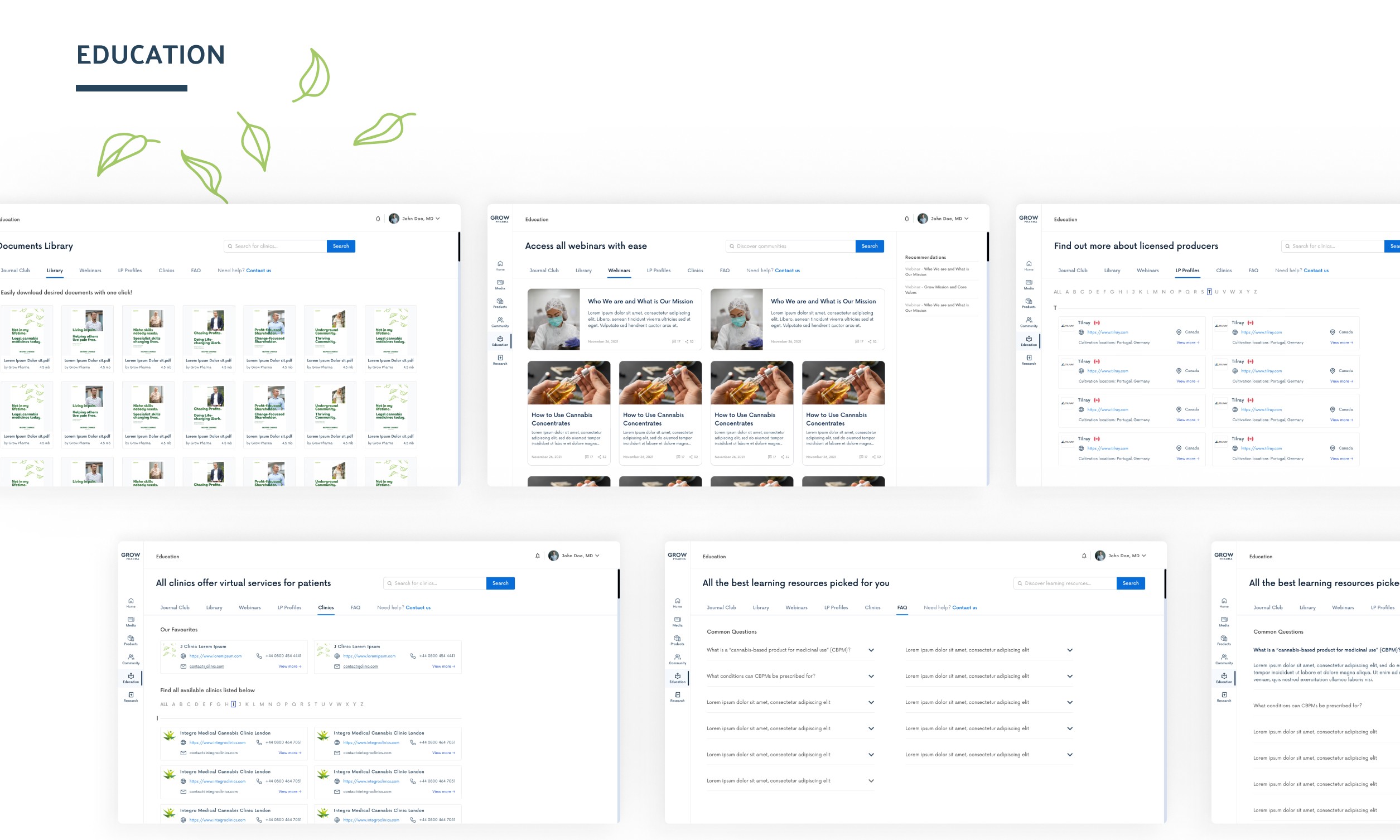
The low-fidelity wireframes went through stakeholder review and feedback from early-access doctors before I moved to high-fidelity. The features that survived that process were the ones that earned their place:
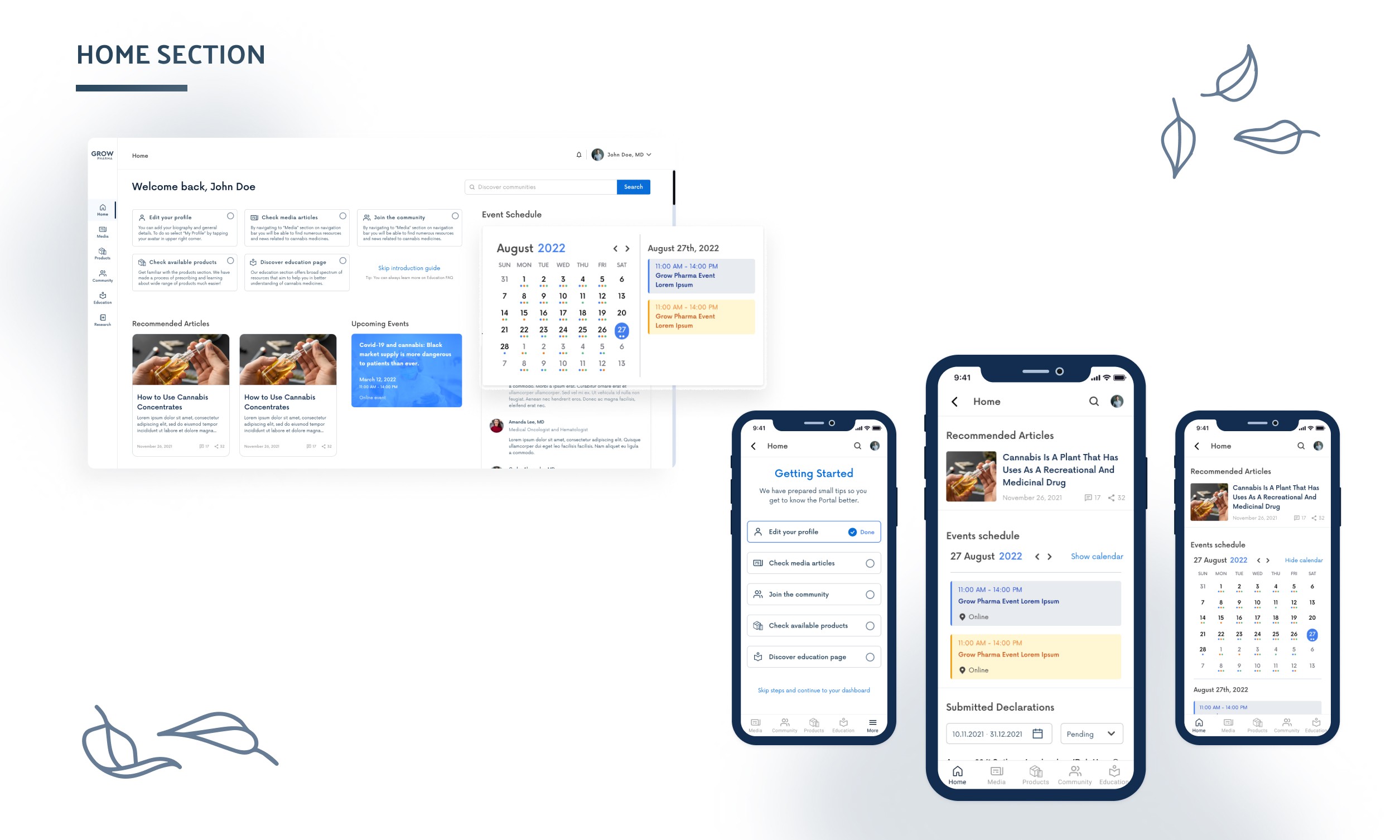
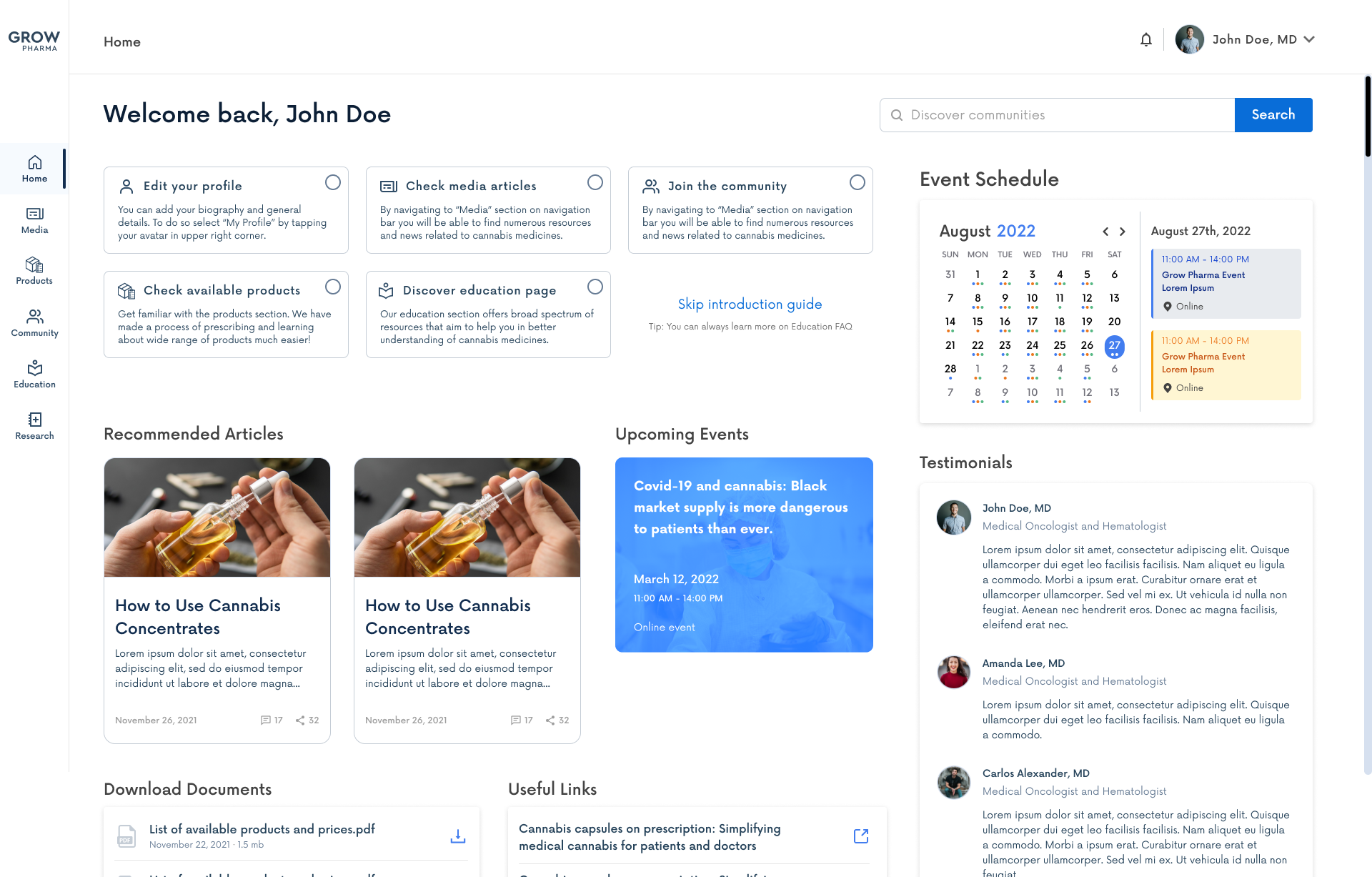
Interactive Dashboard — The home screen wasn't a vanity page. It was a functional hub: pending prescriptions, recent patient activity, flagged updates from Grow Pharma, and direct links into the most-used parts of the portal. I kept it scannable. No hero images. No marketing copy. Just what a doctor needed to know right now.
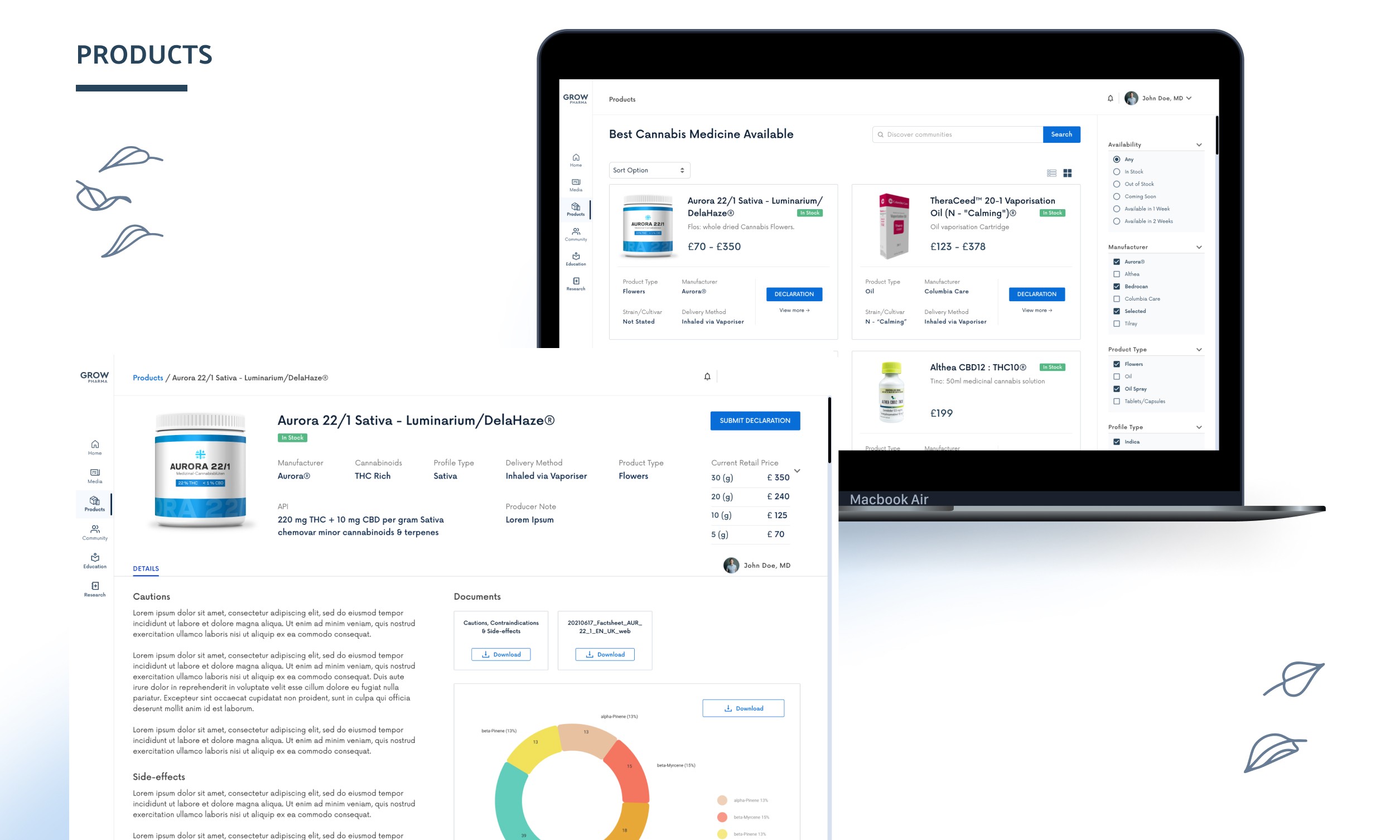
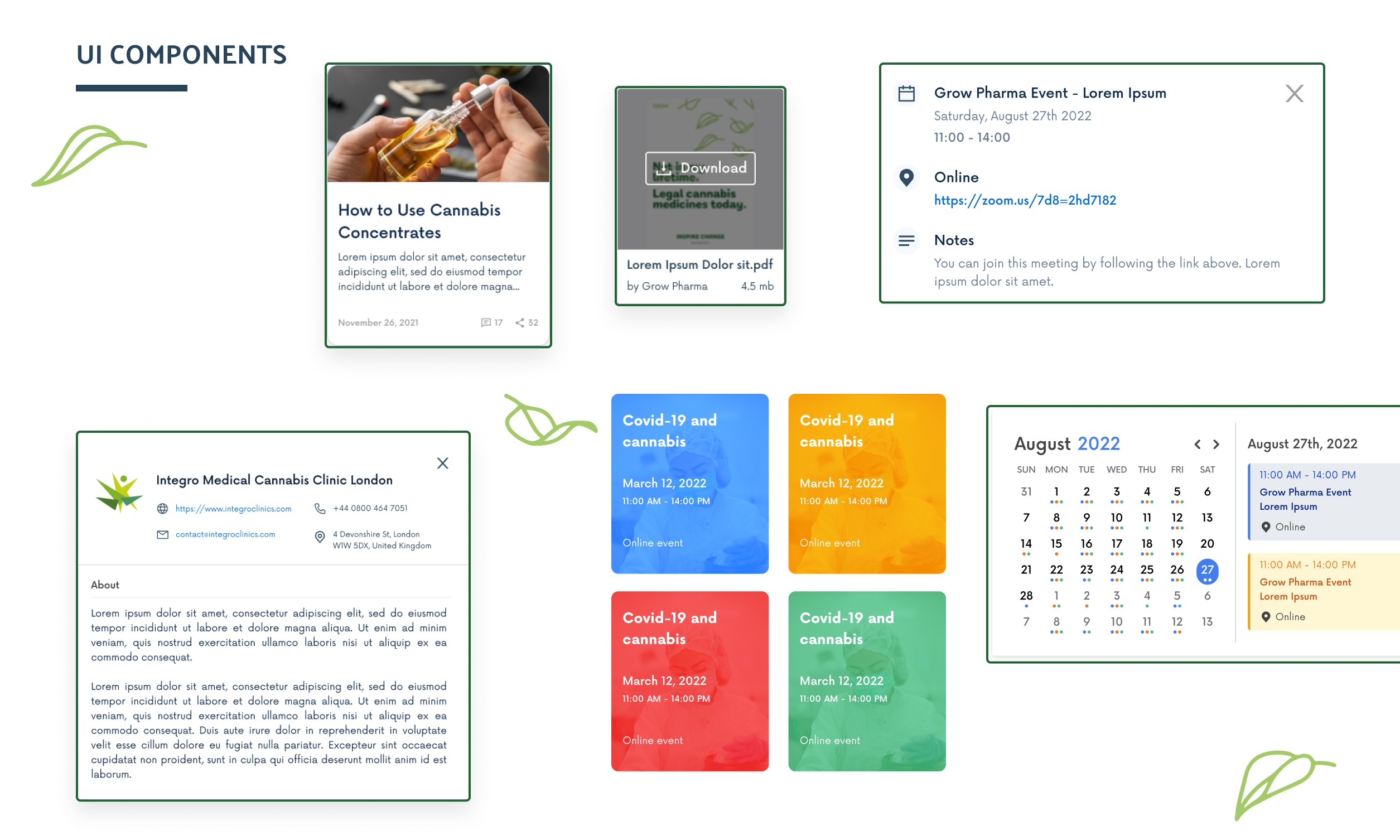
Resource Library — A searchable, filterable collection of clinical studies, product brochures, prescribing guidelines, and regulatory documents. I designed this to feel closer to a medical database than a content marketing library — because that's how doctors would trust it. The tone of the content architecture mattered as much as the UI.
Patient Management System — This was the emotional center of the platform for doctors. A structured, clean view of each patient's prescription history, current medications, and clinical notes. I paid particular attention to how information was displayed here — density without confusion, because doctors are trained to read dense information, but only when it's well-organized.
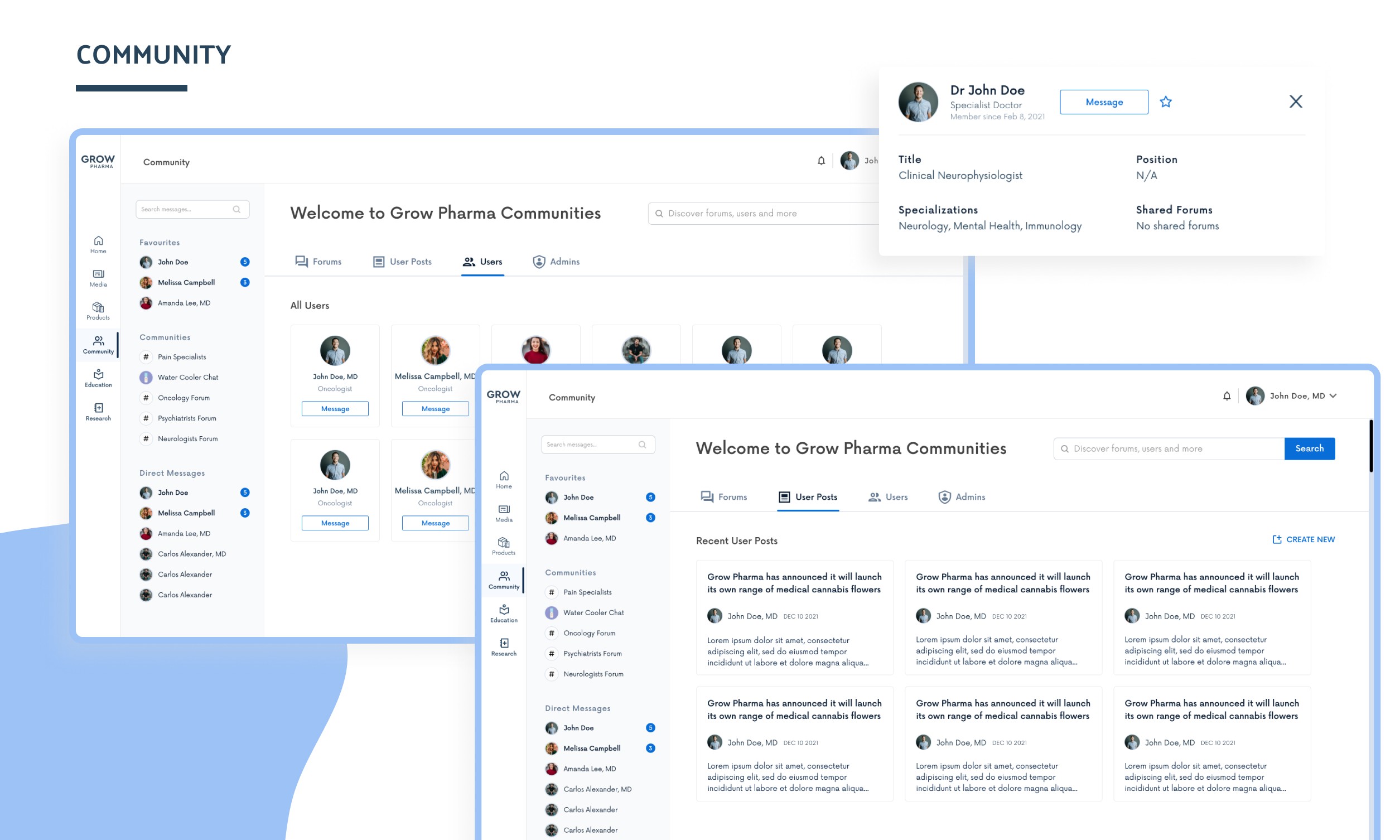
Secure Messaging — A direct, compliant channel between doctors and Grow Pharma's clinical support team. I deliberately kept this simple. No threads, no tags, no features for features' sake. Fast in, fast out.
Video Appointment Integration — One of the harder challenges. Embedding secure video consultation capability directly in the portal meant coordinating closely with engineering on authentication, data handling, and regulatory compliance. From a design perspective, my job was to make scheduling and launching a call feel as low-friction as possible while ensuring every relevant compliance note was surfaced at the right moment — not buried in settings.
Data Analytics & Reporting — Tools for doctors to see their own prescribing patterns and patient outcomes over time. This was partly about clinical value, and partly about Grow Pharma's engagement strategy: a doctor who can see the positive impact of their prescribing behavior is more confident and more likely to continue.
Outcome
Beyond the Portal
Alongside the portal, I also supported Grow Pharma with social media assets, video thumbnails, prescription receipt documents, packaging, and medical documentation. This meant building a visual language that had to work both in a regulated web application and in printed medical materials — consistency and credibility across every touchpoint.
What the Platform Achieved
The Doctors Portal gave healthcare professionals a single trusted place for all clinical, regulatory, and product information relevant to medical cannabis prescribing in the UK. Engagement increased, administrative burden dropped, and data security was built in — not bolted on — so Grow Pharma could operate with confidence and doctors could trust it with patient data.
What I Took Away
Designing in health-tech is a responsibility, not just a craft. The decisions I made had downstream effects on patients waiting for access to treatments that could meaningfully improve their lives — and that stakes level changes how you approach every trade-off. The best design work in regulated industries isn't invisible; it's confidence-building. Success is measured by how quickly someone can do what they came to do, and how safe they feel doing it.
Compliance, handled well, isn't a design obstacle — it's a trust signal. And user research in specialized fields only works if you're genuinely curious and disciplined enough to let the findings lead, even when they contradict what you assumed going in.